Never Fear Never-Skilling
On 17 Aug 2026 by MikeMuch ink continues to be spilled over AI in medical education. The latest falling sky is “never-skilling”, not to be confused with deskilling or mis-skilling – but just as silly.
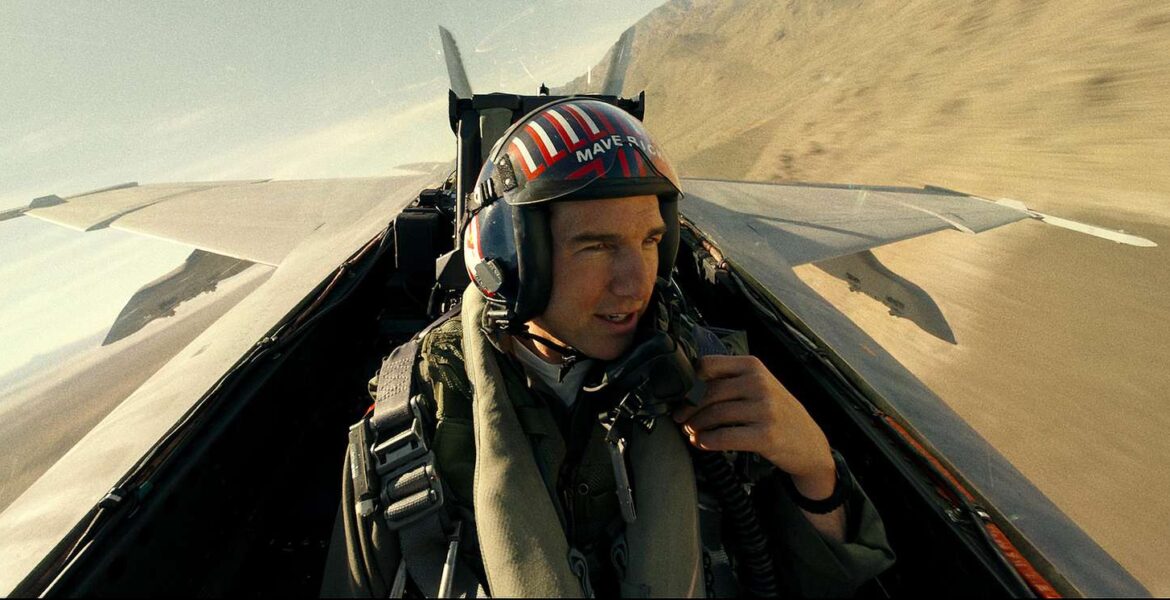
These planes you’ve been testing, Captain, one day, sooner or later, they won’t need pilots at all. Pilots that need to sleep, eat, take a piss. Pilots that disobey orders. All you did was buy some time for those men out there. The future is coming, and you’re not in it.
— Top Gun: Maverick, 2022
Pedantic hand wringing is the lifeblood of our profession. It fills the journals whose business is a symbiotic loop filling the CVs of academics with occasionally vapid outcries. Perhaps I complete the ecosystem by filling my blog with snark about their hand wringing.
The latest such is a doozy. An unnecessarily long list of co-authors, most from Duke’s outpost in Singapore or thereabouts, have discovered never-skilling. Whereas “experienced” clinicians like me risk losing becoming dull & flaccid by relying on AI to do our work, trainees may use AI so much they never learn in the first place. Gasp!
The integration of artificial intelligence (AI) into medical training is accelerating faster than the educational frameworks designed to govern it.
Most of this is absurd, and the little that is not is the least of our problems.
The Need for Speed
The integration of artificial intelligence (AI) into medical training is accelerating faster than the educational frameworks designed to govern it.
No kidding! We’re still requiring pre-meds to learn calculus and organic chemistry. Even by academic standards, medical education moves mighty slow.1
IMHO this is the only medical education problem that matters. Way back in 1910 when the Flexner Report codified our current med ed system, we could trust medical science & technology would be about the same in one’s first year of med school as when they emerged 7-15 years later. That is definitely not true today. I’d like to fancy myself above average with tech, and I have no idea what a 1st year med student in 2026 will need to know in 2033.2
Hand wringing over “never-skilling” is intentionally making it harder to prepare today’s trainees for this brave new world. If we don’t get this right, medical training will slide into irrelevance. Relying on state medical license laws to hold back the tide of technology is the last refuge of the Luddite.
Calculus
Maybe this is why we still require calculus – it’s the perfect metaphor! Calculus is deep at the heart of AI, but hardly anyone who uses AI understands the calculus under the hood. Like it or not, we’re entering a brave new world in which medical practitioners will wield AI to solve problems they don’t deeply understand. And that’s ok.
Ignoring the Mechanism
Much as we professor types may hate to admit it, you can absolutely make diagnoses and treatments without understanding them. Indeed, “understanding” is an absurd and impossible standard.
Metformin is among my favorite high level examples. First line for type 2 diabetes and related disorders, it’s on the shortlist of most used drugs in the developed world. And no one knows how it really works. Perhaps the 95% of doctors who’ve prescribed it at some point in their careers all never skilled?
Keep digging and the absurdity emerges. Broken bones would seem a well understood phenomenon. I did well enough at undergrad physics. No way I could draw a complete Newtonian force diagram of a wrist fracture let alone solve Maxwell’s equations for the electrodynamics that ultimately break the bone’s microscopic structure. And every professional physicist would admit no one really understands how gravity interacts with the microscopic world. So I guess we’re all never-skilled.
Ke et al are in the same logical trap of every AI hand wringing professor. There is no such thing as absolute skill. Just because trainees today don’t need to learn what we learned doesn’t make them lazy or wrong.3

Our dog Basil is a true master at catching tennis balls. I’m pretty sure his grasp of gravity, be it classical or relativistic, is weak. If you somehow him catching a tennis ball treated your gallstones, would you care his theoretical understanding was so shallow?
Heaven Forbid a Student Learn Incorrect Dogma from a Robot!
Ke at al save just a little terror for mis-skilling. This is the truly shocking notion that a student might internalize an incorrect understanding of medicine from AI. Heaven forbid!
Surely no medical student has ever learned outdated, misconstrued or just plain wrong dogma from a human instructor!
What if the Power Goes Out?!?!
…clinical rotations and workplace-based assessments increasingly occur in environments where AI tools are readily available and commonly used. As a result, trainees may perform adequately in AI-enabled clinical environments while failing to demonstrate the independent competence required in AI-restricted, high-stakes assessments.
Allow me to translate. In the real world, AI is everywhere. But what if students have to take an artificial test – ostensibly to ensure they’re ready for the real world – where they can’t use AI?
When I was a med student, an extremely eminent pediatric cardiac surgeon told his fellows (with me cowering in the back), “the stethoscope is there for when the power goes out in the hospital and you can’t get an echocardiogram”. Blew my mind at the time. He was absolutely right and has only proved more so over the years since.
One of its greatest benefits is that AI is available to every human with an internet connection. Jacaranda, a Kenyan social enterprise where I worked in residency, has done tremendous work tailoring AI for underserved communities in Africa. Sure, if you’re training med students for war zones or Antarctic research stations where they may not have satellite internet, they’ll need special training. But building our medical education system for Y2K just because that’s when its current designers trained is absurd.
AI can, by contrast, execute the entire diagnostic chain autonomously. This is not a shift in cognitive work. It is a substitution for it.
True. It’s a transformative technology. That does not mean we should treat it any differently. That it makes faculty of my generation uneasy is not, IMO, sufficient justification to force trainees to prepare for the world of 2005. Perhaps deep down we’re all scared the robots will replace us.
Footnotes
1 – On the plane from which I write this, the gentleman a couple seats over is watching the 2022 Top Gun remix. It’s a surprisingly apt metaphor. Fighter plane dogfights came into vogue with the Red Baron in World War I. Britain never owed so much to so few in 1940. Certainly this is way beyond my expertise, so if you’re an aerial combat expert, please let me know if I’m wrong. But I’m pretty sure the dogfights the bright young students learn in Top Gun are badly antiquated. Don’t get me wrong – it’s riveting cinema, and I have my share of nostalgia for the ’86 original. But I find it hard to believe Air Force commanders are worried their fighter pilots can’t maneuver a Soviet MiG into machine gun range like the good ole days.
2 – I’d argue we should include 4 years of undergrad in that calculation, too. I hate to say it, but a vanishingly small fraction of the chem, biochem, physics & math I studied has ever been relevant to my job as a doctor. Adding 4 years of undergrad to 7-15 years of medical training just makes this “what will be relevant in X years” problem harder.
3 – To give Ke et al just a little credit, they hand wave at this notion.
Some technology-induced dependencies in medicine are not harmful. Surgeons trained after the widespread adoption of laparoscopy were never taught to operate without it. They do not need to.
But then they immediately assert, tellingly with no citations nor evidence to back up their claim, that AI is different. And again later:
An analogy can be drawn with aviation training, where pilots must demonstrate manual flight proficiency alongside the use of autopilot systems. The comparison is not exact, but it illustrates a broader principle: foundational competence should precede reliance on technological assistance.
That “should” is doing a lot of work there, my friends. “Should” because you say so it seems.
Sure, AI is different. It’s revolutionary. It’s arguably the most important technology in the history of medicine. But that doesn’t mean med students need to memorize everything I did just because it makes faculty feel weird.